
Quick answer
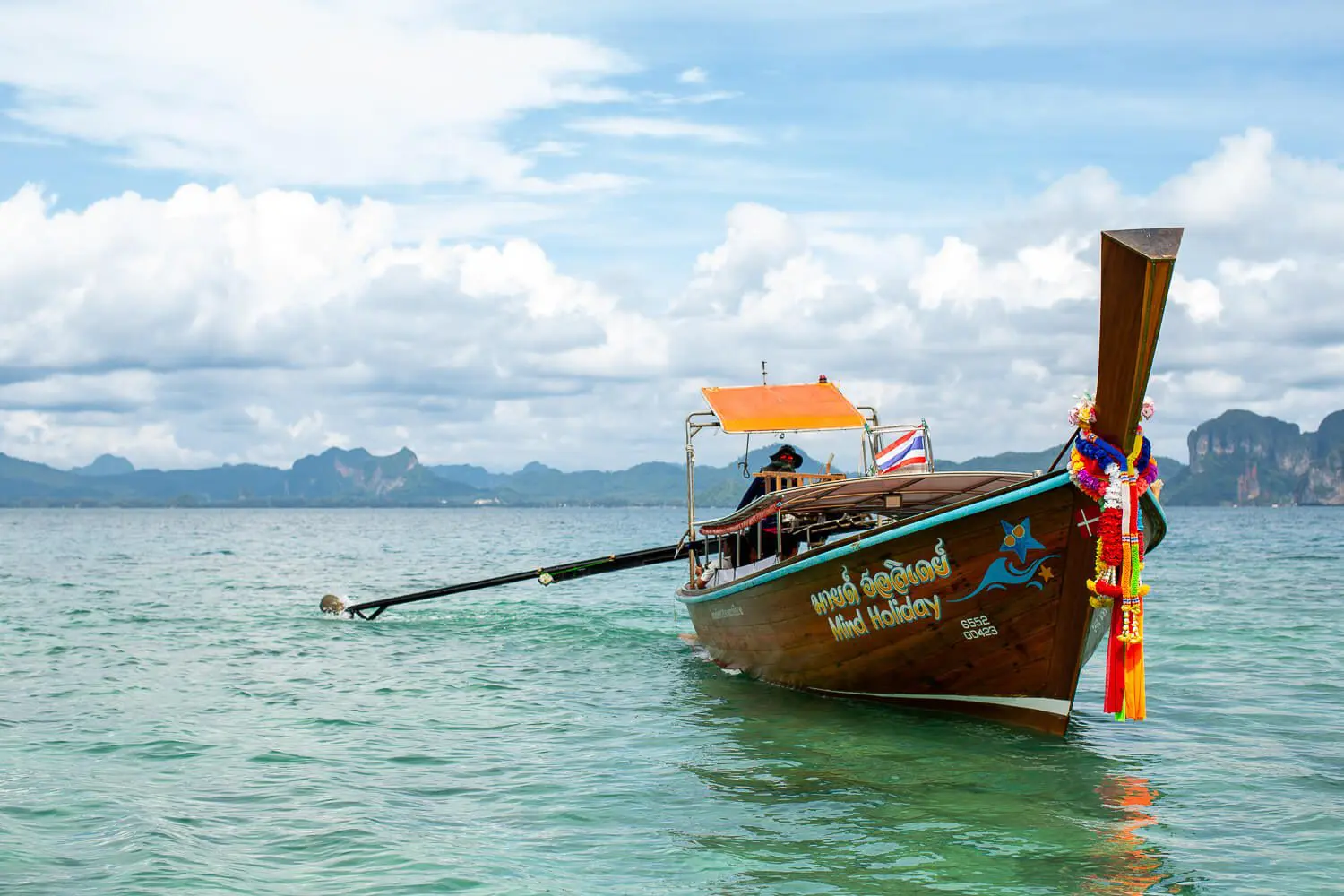
A long tail boat is a traditional Thai wooden vessel powered by an automotive or truck engine mounted inboard, connected to a long propeller shaft that extends several meters behind the stern. The shaft, which gives the boat its name, allows the operator to lift the propeller in shallow water and steer by pivoting the entire drive unit. This design enables navigation through canals as shallow as 30 centimeters, making longtails essential transport across Bangkok's klongs and coastal regions where conventional propeller boats would ground.
The exposed drive shaft extending three to four meters behind the hull makes the longtail boat instantly recognizable across Southeast Asia. An automotive engine—typically salvaged from a truck or car—sits mounted in the center of a narrow wooden hull, connected via a universal joint to the long steel shaft that trails in the water. The operator controls direction not with a rudder but by swinging the entire propeller assembly left or right, a steering method that requires practiced coordination at speed. This unconventional design solves a specific problem: Thailand's rivers and canal networks sit dense with sandbars, vegetation, and shifting sediment. A conventional inboard motor with fixed propeller would snag constantly. The longtail's shaft can be raised clear of obstructions in seconds, allowing the boat to cross water barely deeper than a bathtub. Coastal operators navigate between coral heads and rocky shallows that would wreck a standard hull. Construction remains largely traditional. Builders shape hulls from hardwood planks, curved to slice through current with minimal wake. Most measure five to eight meters in length, narrow enough to slip through tight canal passages but stable in river chop. The engines roar without mufflers—noise reduction would add weight and complexity—creating the characteristic growl that echoes across Bangkok's Chao Phraya River at dawn. Riding a longtail reveals why this design persists despite its noise and fuel consumption. The boats accelerate rapidly, pivot in their own length, and access locations no other motorized craft can reach. Canal networks that served as Bangkok's primary transport corridors before road construction still depend on these vessels. Coastal fishing communities use them to reach offshore grounds, while tourist operators run routes through mangrove channels and island-dotted bays where the shallow draft and maneuverability prove essential.
“The operator controls direction not with a rudder but by swinging the entire propeller assembly left or right, a steering method that requires practiced coordination at speed.”
Understanding What Is a Long Tail Boat and Its Unique Design
The long tail boat, known in Thai as ruea hang yao, is a traditional vessel defined by its distinct propulsion system. It serves as a primary mode of transport throughout rivers and canals in Thailand.
1. Long drive shaft design
The vessel derives its name from the long, rotating propeller shaft that extends from the rear of the boat. This shaft allows the operator to steer the craft by manually angling the engine and propeller in the water.
2. Automotive engine origin
Most long tail boats are powered by repurposed automotive engines, often sourced from trucks or large vehicles. These robust engines are mounted on a swivel base, allowing the entire engine block to pivot for steering.
3. Shallow water maneuverability
The ability to tilt the propeller shaft out of the water makes these boats effective in shallow canals and coastal areas. This design prevents the propeller from striking underwater obstacles or getting stuck in soft silt.
4. High speed output
Despite their traditional wooden hull construction, these vessels can reach significant speeds in open water. The direct connection between the automotive engine and the propeller provides a high power-to-weight ratio.
5. Operator steering technique
The helmsman controls the boat by using a long steering handle connected to the engine mount. This requires physical strength and significant skill to maintain stability while navigating turns.
6. Traditional wooden construction
The hull is traditionally fashioned from native hardwoods, providing durability against constant water exposure. These hulls are narrow and elongated to minimize drag and increase efficiency.
The Best Time of Day to Use a Long Tail Boat
The best arrival window for long tail boat travel is 06:00–09:00. Arriving during this period allows visitors to bypass the intensity of the midday heat and the increased congestion of boat traffic on canals.
November to February
High seasonal volumeDry and moderate temperatures
Cooler weather makes these months popular for daytime canal tours.
March to May
Moderate to high volumeHot with temperatures over 32°C
Early morning travel is essential to avoid the peak afternoon sun.
June to October
Lower seasonal volumeFrequent rainfall and humidity
Plan trips early to navigate around typical afternoon tropical showers.
Weekday mornings
Low to moderate—
Early weekday departures provide the most quiet and stable water conditions.
Verdict: The best arrival window for long tail boat travel is daily between 06:00 and 09:00, ideally during the cooler months of November through February.
How and Where to Find What Is a Long Tail Boat
Long tail boats are stationed at rivers and canals throughout Thailand, with significant hubs in Bangkok and along coastal regions such as Phuket. The most direct way to locate them is by traveling to major waterfront piers, local ferry terminals, or designated beach boat stands.
Travel to major piers such as Saphan Taksin or coastal beach roads in Phuket
Board directly from public piers or designated boat zones
Walk to established canal side landings or beach boat staging areas
Pricing for What Is a Long Tail Boat Service
There is no standardized entrance fee for long tail boat services, as costs are determined by individual boat operators based on specific routes, distances, and duration. Passengers negotiate rates directly with local boatmen at piers or landing points.
Actual costs depend entirely on the negotiated route and the duration of your private boat charter.
Daily Availability of What Is a Long Tail Boat
Long tail boats are available for hire daily. Actual availability depends on local boat hire agreements and individual operator schedules.
| Monday | 00:00–23:59 | |
|---|---|---|
| Tuesday | 00:00–23:59 | |
| Wednesday | 00:00–23:59 | |
| Thursday | 00:00–23:59 | |
| Friday | 00:00–23:59 | |
| Saturday | 00:00–23:59 | |
| Sunday | 00:00–23:59 |
Etiquette for What Is a Long Tail Boat Travel
Long tail boats navigate narrow canals and open water where balance and consideration for the crew ensure safety and smooth passage. Following basic boat conduct protects passengers and respects the operator's workspace.
Do
- Wear the life jacket provided by your operator at all times.
- Sit low in the boat and distribute weight evenly.
- Listen to the pilot's instructions regarding movement and seating.
- Hold onto secure points when the boat accelerates or turns.
- Keep bags and belongings secured to prevent them falling overboard.
Don't
- Don't stand or move around while the boat is in motion.
- Don't lean over the sides or trail hands in the water.
- Don't touch the engine or propeller shaft during the journey.
- Don't board or disembark until the pilot signals it is safe.
- Don't distract the pilot with requests while navigating tight or busy channels.
Check availability
Frequently asked questions about what is a long tail boat
Everything you need to know about what is a long tail boat